

A Sign from Aokigahara
Some objects become important because of what they are. Others become important because of where they have been and the stories they carry with them. This sign is one of those objects.
The artifact came to The Paranormal Museum through a former United States Marine who was briefly stationed in Japan. During that time, the film The Forest was released, and like many people, he and his friends became curious about the real location that inspired it: Aokigahara Forest at the base of Mount Fuji. Known internationally as the “Suicide Forest,” Aokigahara has long been associated with tragedy, folklore, and reports of paranormal activity.
The forest was only about an hour away by bus, and the group visited several times. What began as curiosity quickly became something far more serious. During their visits, they encountered the reality behind the forest’s reputation, including discovering individuals who had taken their own lives. The experience left a lasting impression on everyone involved.
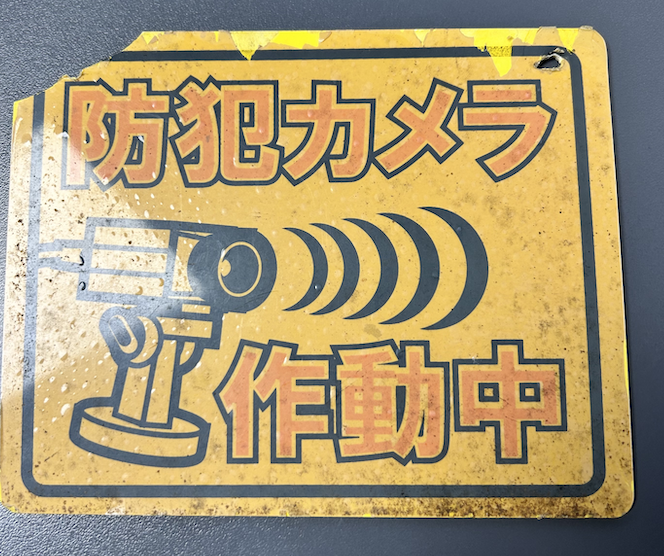
On one visit, they found a body. Nearby was this sign, which they recognized from earlier trips. It had originally been attached to a rope along one of the established walking paths. Its purpose was simple: to discourage visitors from leaving the trail and venturing deeper into the forest. If you search for photographs of Aokigahara, you can still find similar signs marking the boundaries between the maintained paths and the more isolated areas of the woods.
One of the Marines removed the sign and brought it back to the United States as a remembrance of the experience. Eventually, he gave it to the donor. For years, it remained packed away and largely forgotten. Life moved on, military service ended, and the sign disappeared into storage.
Then, years later, it resurfaced when the donor’s wife discovered it while going through old belongings. Rather than feeling like a forgotten piece of wood or metal, the sign immediately brought back the memories attached to it. The donor moved it from his home to a locker at work, uncomfortable with keeping it but equally unable to throw it away.
That feeling is what makes this artifact so fascinating.
When people talk about haunted objects, they often focus on unexplained activity. Yet many of the most compelling objects in museum collections are not important because of what they do. They are important because of the powerful human experiences attached to them. The donor did not preserve this sign because it was valuable. He preserved it because it remained connected to a place, a moment, and a series of experiences that stayed with him long after he left Japan.
Perhaps that is one way to understand the paranormal. Not simply as unexplained phenomena, but as the lingering connection between people, places, and objects. Some artifacts seem to hold onto their stories, and some stories refuse to let go of the people who experienced them.
Today, the sign hangs in The Paranormal Museum, more than 7,000 miles from the forest where it once stood. Its original purpose was to mark a boundary and encourage people not to walk farther into the woods. That purpose has long since passed, but perhaps it has found a new one. Here, its story can be told. Here, it can serve as a reminder of the lives, experiences, and choices connected to it. And perhaps, through that act of remembering, it continues to do what meaningful artifacts have always done: create a connection between people, places, and stories across both time and distance.

