

TICKETS OPEN SOON!
DECEMBER 4-6, 2026
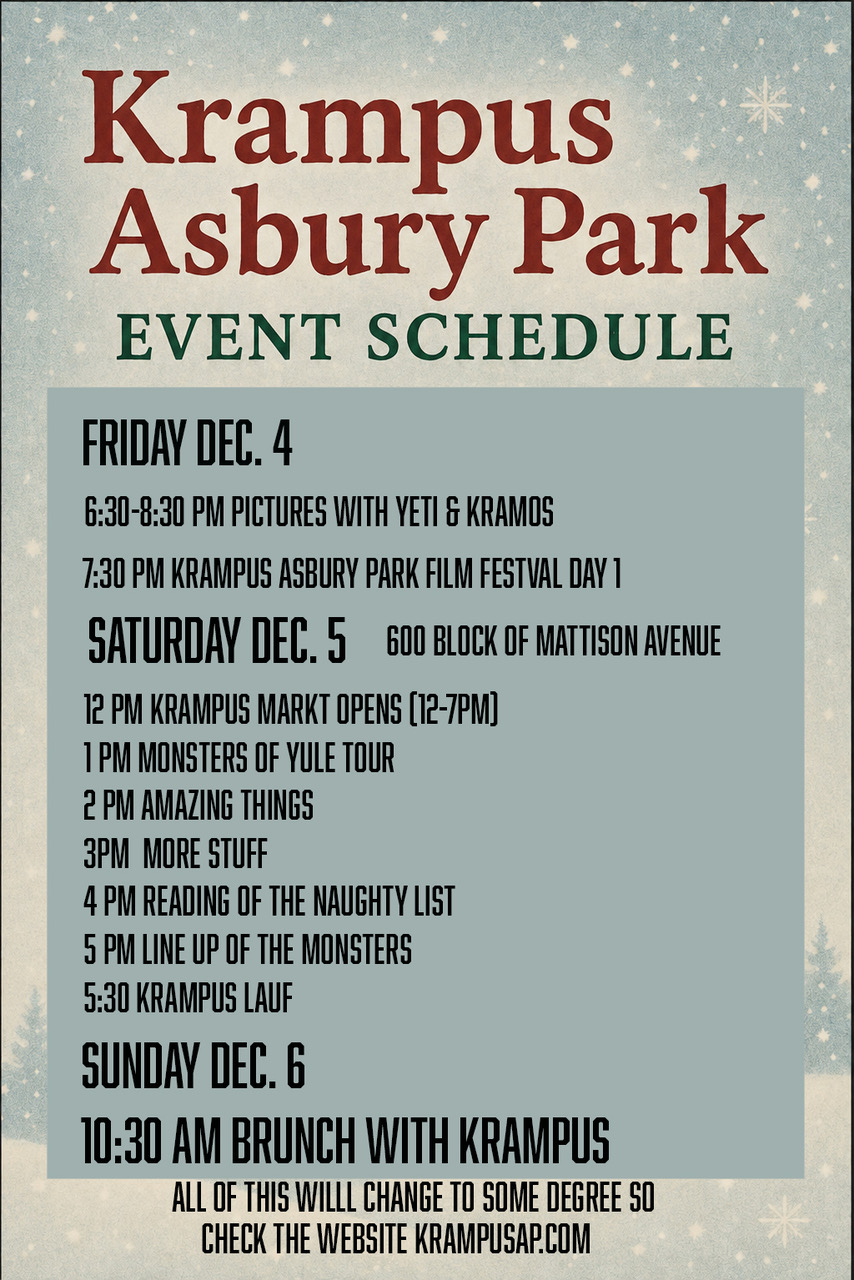
Krampus Asbury Park – Event Schedule
The Origins and History of Krampus
Before Christmas belonged to carols and commercials, winter in the Alps had its own ruler — and he carried a bundle of birch sticks. Among the mountains and valleys of Austria, Bavaria, and the Tyrol, people told stories of Krampus, a creature of horns, fur, and clattering chains who appeared as the nights grew long. He was not evil. He was the shadow that made the light visible — the reminder that the season of joy was also the season of survival.
Ancient Roots
Krampus’s story began long before Christianity. His origins lie in the pre-Christian festivals of Central Europe, when people marked the dark turn of the year with fire, noise, and masks meant to chase away winter spirits. Villagers dressed as horned beasts and paraded through the snow, creating chaos that symbolically drove out the cold and invited fertility back into the land. These rituals were less about punishment and more about balance — a release of fear through shared spectacle.
When Christianity took hold in the region, the Church didn’t fully erase these traditions. It absorbed them. Krampus was given a new role: companion to Saint Nicholas, the kindly bishop who rewarded good children. On the eve of December 6th — Krampusnacht — the saint visited homes with gifts, and Krampus followed close behind, growling and rattling chains for those who had misbehaved. Together they became a living morality play, good and bad walking side by side through the snow.
The Folklore Evolves
By the nineteenth century, Krampus had taken on a more familiar form — half-goat, half-man, with a long red tongue and an unnerving grin. Artists began printing Krampuskarten, ornate postcards showing him chasing or teasing victims, often paired with greetings that mixed fear and humor. The images spread quickly through Austria and Germany, fixing Krampus in the public imagination.
The Church tried repeatedly to distance itself from the figure, calling the tradition indecent or un-Christian. But it was too late. Krampus had become part of the rhythm of winter life — a celebration that belonged to the people, not the pulpit.
And he was not alone. Across Europe, cousins of Krampus carried on the same work in different guises. In Germany, Knecht Ruprecht served as Saint Nicholas’s stern assistant, soot-stained and carrying a switch. In Switzerland, Schmutzli played the same role, while the Perchten of Austria — followers of the winter goddess Perchta — roamed the valleys in elaborate wooden masks. Parkelj frightened children in Slovenia, Hans Trapp haunted Alsace, and in Italy, La Befana — part witch, part grandmother — dispensed gifts and lessons in equal measure. Together, they represented an unbroken line of midwinter folklore that tied light and dark, punishment and reward, into one shared story.
Suppression and Survival
In the twentieth century, Krampus faced a new kind of threat — not from priests, but from politics. In 1934, Austria’s authoritarian Fatherland Front government banned Krampus parades in several provinces, declaring the figure “evil” and harmful to children. Pamphlets were distributed warning parents against exposing the young to such “unholy traditions.”
After Austria was annexed by Nazi Germany in 1938, Krampus fared no better. The Nazi regime attempted to reshape folklore into propaganda that served its ideology. They encouraged “pure” Germanic myths that glorified order and obedience, and Krampus — with his pagan roots, chaotic nature, and ties to Catholic folk customs — didn’t fit the narrative. Some Nazi folklorists tried to reinterpret him as a symbol of discipline or strength, but for the most part, Krampus was quietly erased from public celebrations.
Despite the bans, he never disappeared. In small towns and mountain villages, families continued their Krampus traditions behind closed doors. After the war, he reemerged almost immediately. By the 1950s, the old parades returned to Alpine streets, and Krampuskarten once again filled shop windows. What fascism tried to erase had survived in the one place it couldn’t reach — memory.
Resurgence and Reinvention
By the 1980s, Krampus was still largely a regional tradition. But after the fall of the Berlin Wall in 1989, there was a cultural thaw across Central and Eastern Europe. People began reclaiming old folk practices that had been suppressed or sanitized under decades of authoritarian rule. In Austria and Germany, Krampus came roaring back — not as a relic, but as a celebration of cultural identity and independence.
The 1990s saw a powerful resurgence of Krampusläufe — the traditional Krampus runs — complete with handcrafted wooden masks, carved horns, and roaring bonfires. What had once been a small, local ritual became a public festival that drew thousands. The tradition spread rapidly through Europe and, eventually, across the Atlantic. By the early 2000s, Krampus had found new life in films, art, parades, and even holiday markets.
The Enduring Shadow
Today, Krampus is more than folklore. He’s a reminder that winter stories once held teeth — that the season of light was never meant to be without shadow. In Asbury Park or Salzburg, his presence carries the same message it did a thousand years ago: the year is turning, the dark is here, and we face it not with silence but with noise, laughter, and a little fear.
Krampus endures because he tells the truth about winter. It isn’t all joy and kindness; it’s survival, defiance, and the uneasy truce between the sacred and the wild. Every December, when the horns and bells return, they carry that old Alpine wisdom: the holidays aren’t just about light overcoming darkness — they’re about learning to live with both.
The History of Krampus Asbury Park
Krampus found his way to Asbury Park not by accident, but because the city has always had a taste for the offbeat. Long before the horned figure appeared in local parades and storefronts, Asbury Park had already built its reputation as a home for outsiders, artists, and storytellers who preferred their holidays with a bit of edge. It was the perfect place for the old Alpine spirit to find a modern stage.
Origins and Concept
Krampus Asbury Park began in the 2010s as part of a broader cultural revival in the city’s downtown, blending folklore, art, and community into a winter festival that felt distinctly Asbury. Organized by local historian and event producer Kathy Kelly — known for The Paranormal Museum, Paranormal Books & Curiosities, and a long history of inventive cultural programming — Krampus Asbury Park took a European folk tradition and gave it a New Jersey soul.
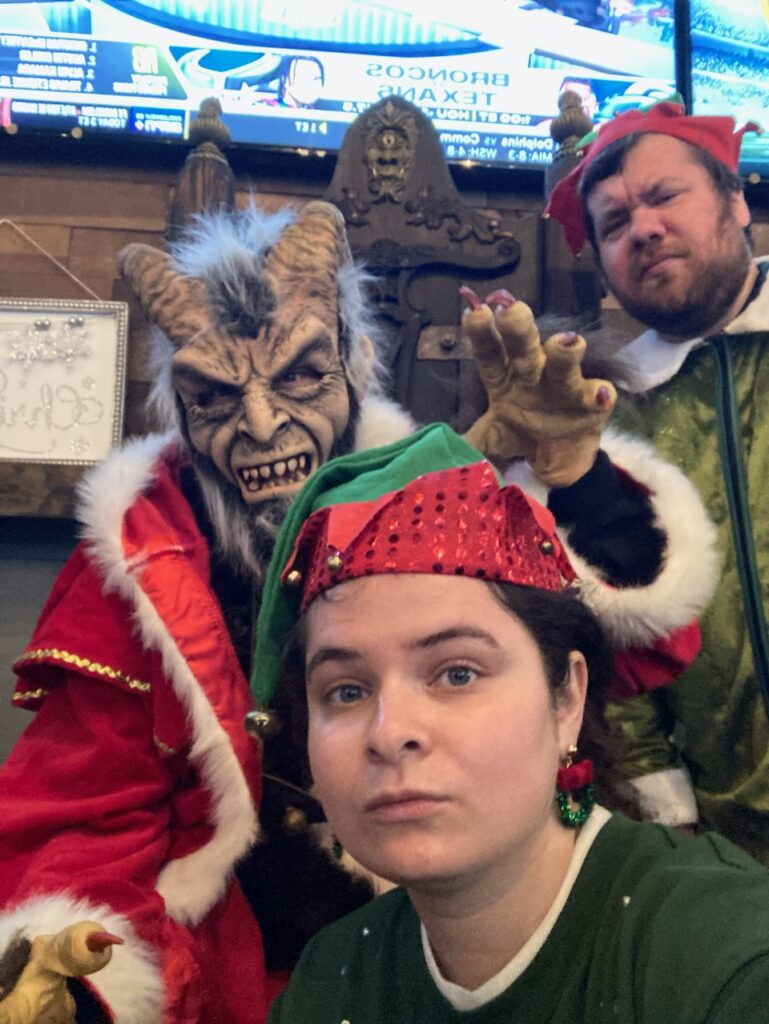
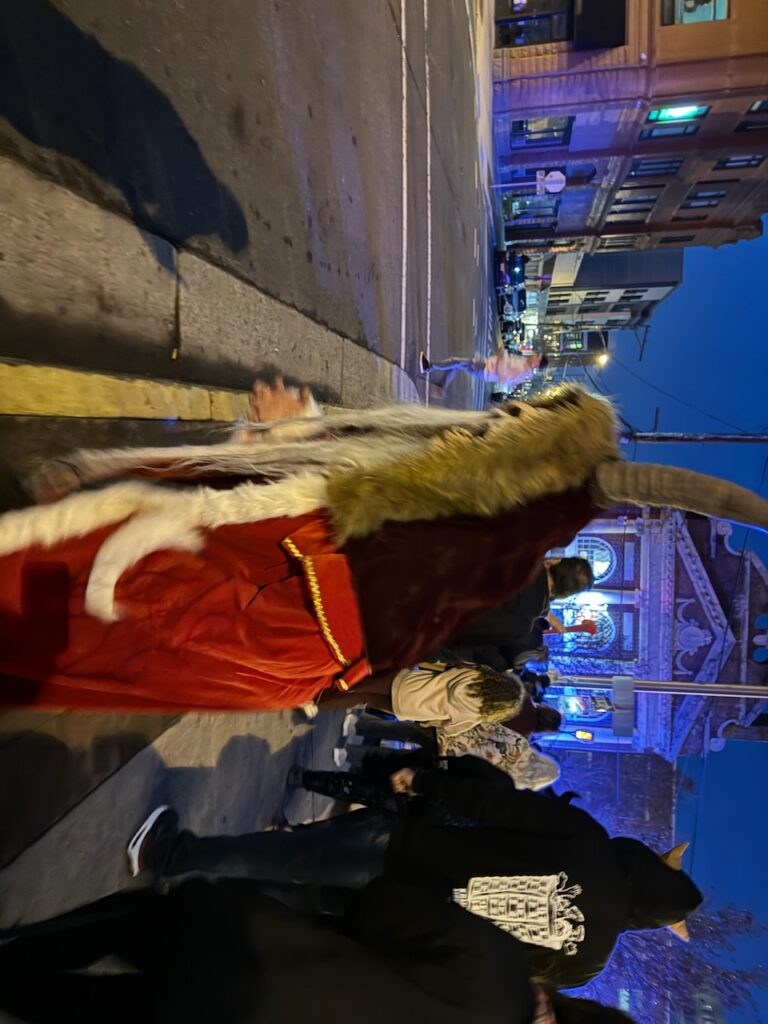
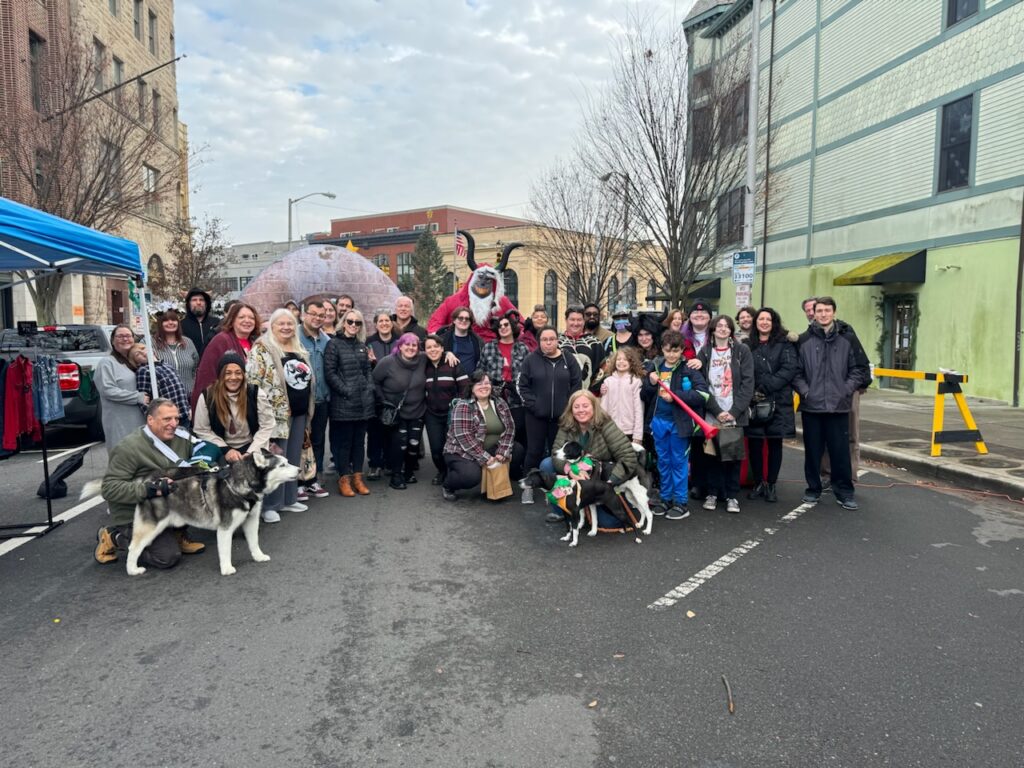
The goal wasn’t to import a gimmick but to reinterpret Krampus for a town that already thrived on contradiction: elegant and gritty, historic and modern, joyful and strange. The festival’s early years centered on a Krampuslauf — a procession of costumed Krampuses marching through Cookman Avenue — along with music, art, and independent vendors. It was equal parts folklore and street theater, designed to bring life to the winter season and highlight the creative community that fuels Asbury Park year-round.
Growth and Community Involvement
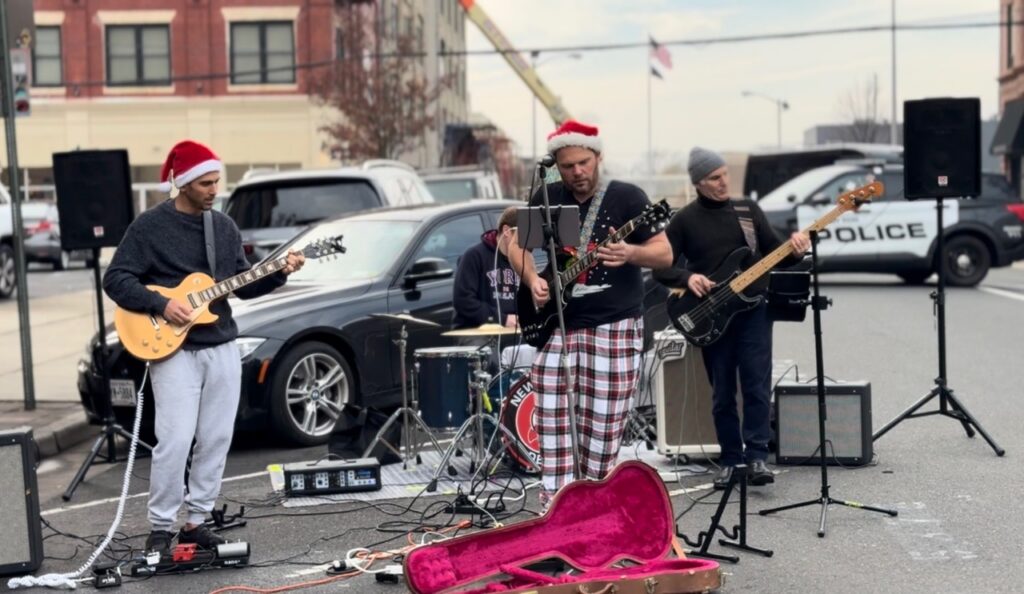
Over time, Krampus Asbury Park grew from a single-day event into a multi-day celebration featuring a film festival, holiday market, live music, and the Krampuslauf Costume Contest with a cash prize. The event drew on local businesses, artists, and performers who saw in Krampus not a monster, but a symbol of the city’s resilience — a reminder that Asbury Park’s history has always been about transformation, reinvention, and surviving the cold seasons.
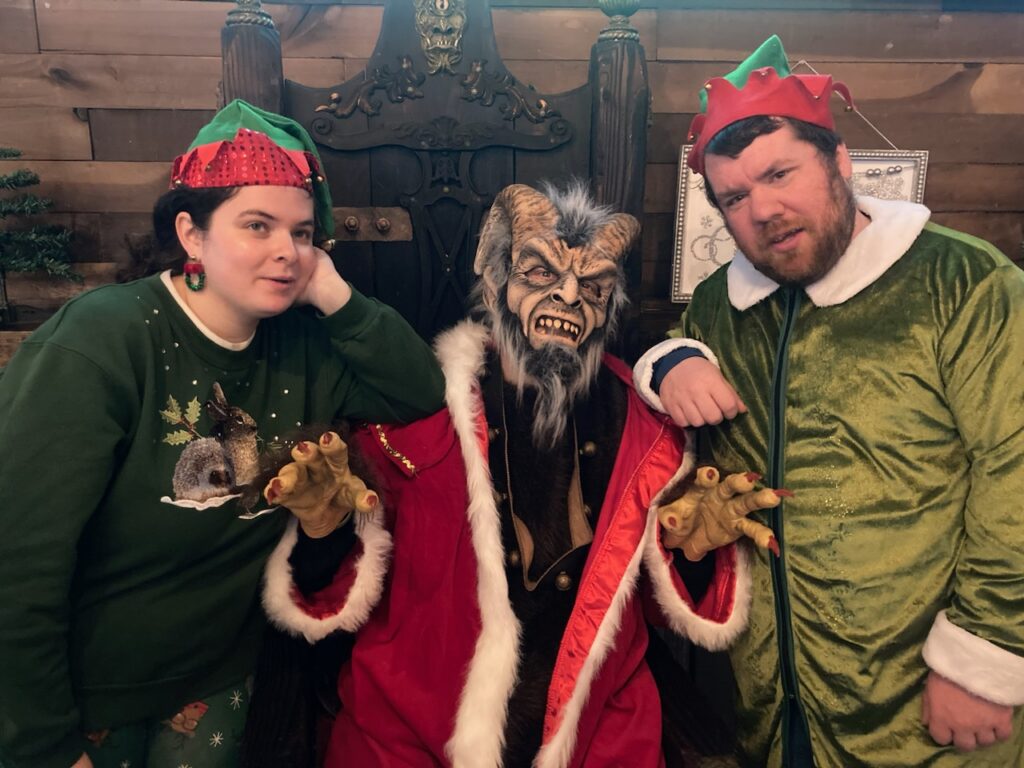
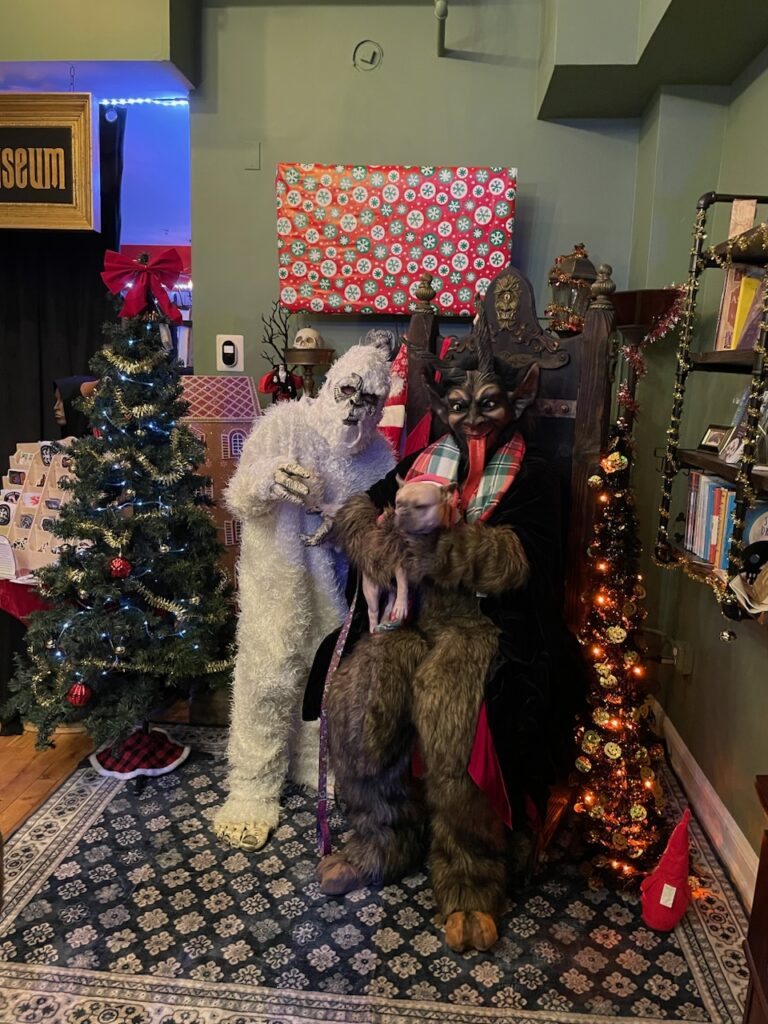
The addition of the Monsters of Yule Tour connected the festival back to its European folklore roots, while the Brunch with Krampus offered something uniquely Asbury: humor, hospitality, and a little chaos served with mimosas.
Krampus and the Spirit of Asbury Park
Krampus Asbury Park stands out because it doesn’t just imitate European traditions — it adapts them. The Krampus who walks these streets is both ancient and unmistakably local. He belongs to a city that loves its legends, whether they come from the Alps or the Jersey Shore. In Asbury Park, Krampus isn’t simply a punisher of the naughty; he’s a celebration of the weird, the creative, and the joyful defiance that defines the town.
Today, Krampus Asbury Park continues each December as a weekend of folklore, music, art, and community. It’s part of Asbury’s ongoing story — one that finds beauty in the dark, warmth in the cold, and laughter in the shadows.