

Come dressed as Krampus—or one of the strange creatures of winter folklore—and take part in the Krampus Asbury Park Costume Contest.
The winner gets the screams of naughty children and various prizes.
Costumes can be traditional, handmade, strange, frightening, funny, or completely original. You do not need a professionally carved mask or an expensive costume. Creativity, character, and the spirit of Krampus are what matter.
How to Dress Like Krampus
A traditional Krampus look can be built from horns, dark or brown fur, a frightening face or mask, bells, chains, heavy boots or hooves, and a bundle of birch switches. It can be as simple or elaborate as you want.
What Does Krampus Look Like?
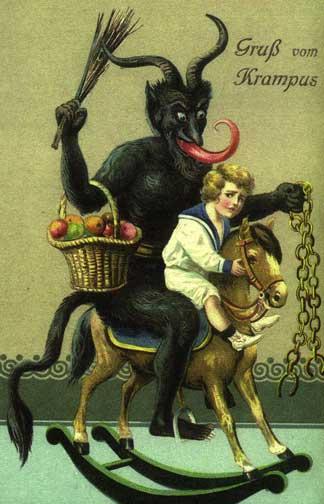
Krampus
Horns, fur, a long tongue, chains, bells and a devilish or goatlike face. This early-1900s postcard shows how simple the traditional silhouette can be.
Public-domain postcard, c. 1900. Wikimedia Commons
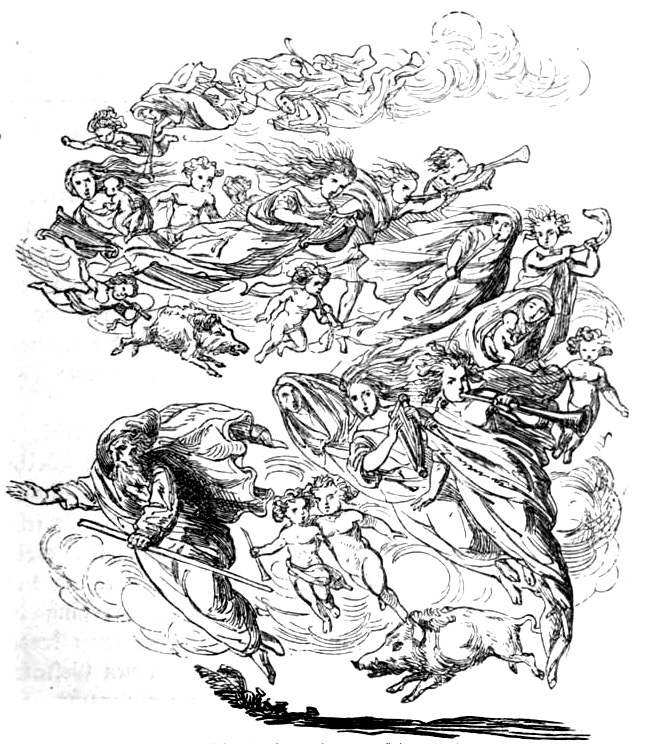
Frau Perchta
Usually imagined as an uncanny winter woman: pale or veiled in some traditions, old and frightening in others. A white garment, wild hair, mask or distorted face can suggest her without an elaborate costume.
Public-domain illustration, 1863. Wikimedia Commons
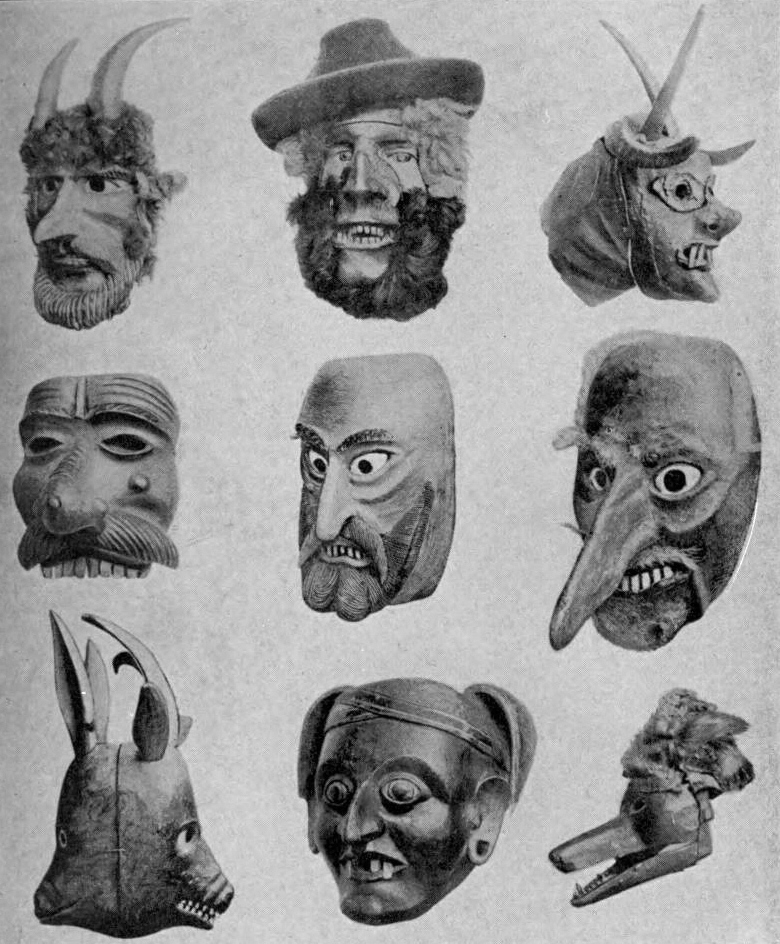
The Perchten
Winter spirits known for strange masks, exaggerated faces, horns, fur and bells. These historical mask studies show that the look can be rough, folk-made and wonderfully odd rather than polished.
Public-domain historical illustration, before 1914. Wikimedia Commons
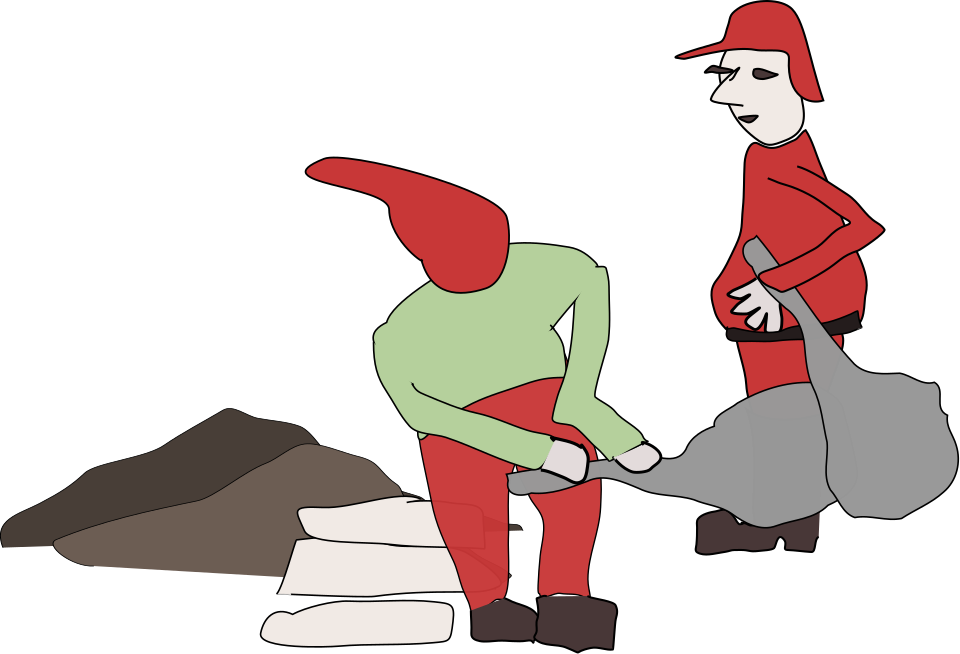
The Yule Lads
Iceland’s thirteen mischievous Christmas visitors can look like ragged mountain men, trolls or rustic pranksters: patched clothes, caps, beards and props tied to each Lad’s particular habit.
Public-domain drawing. Wikimedia Commons
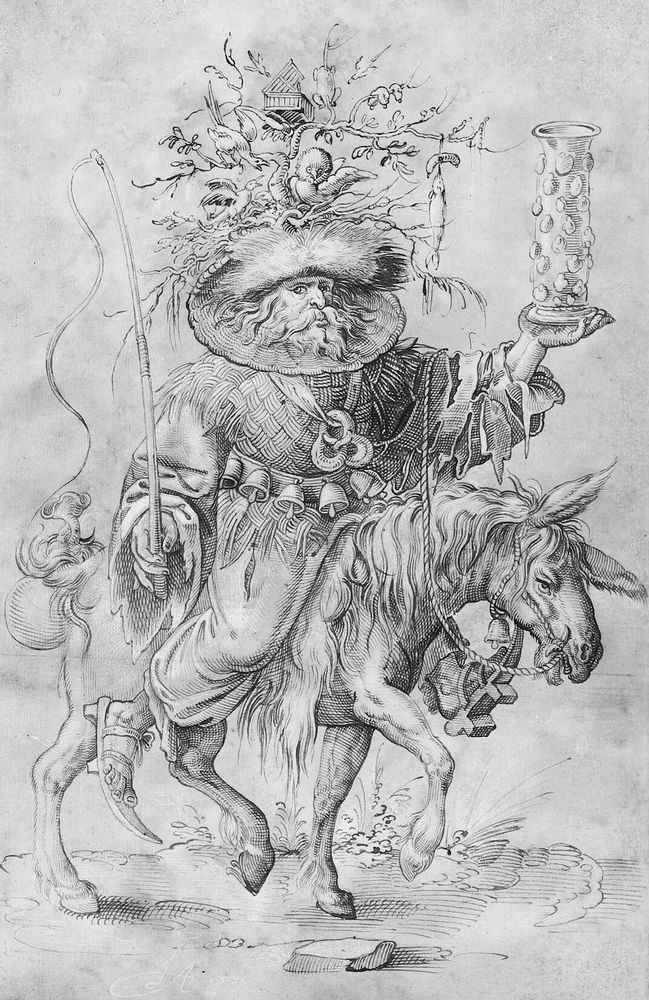
Knecht Ruprecht
A rough winter companion of St. Nicholas, traditionally shown with dark clothing, fur, bells, switches, a staff or sack.
Public-domain drawing by Jost Amman, 1586. Wikimedia Commons
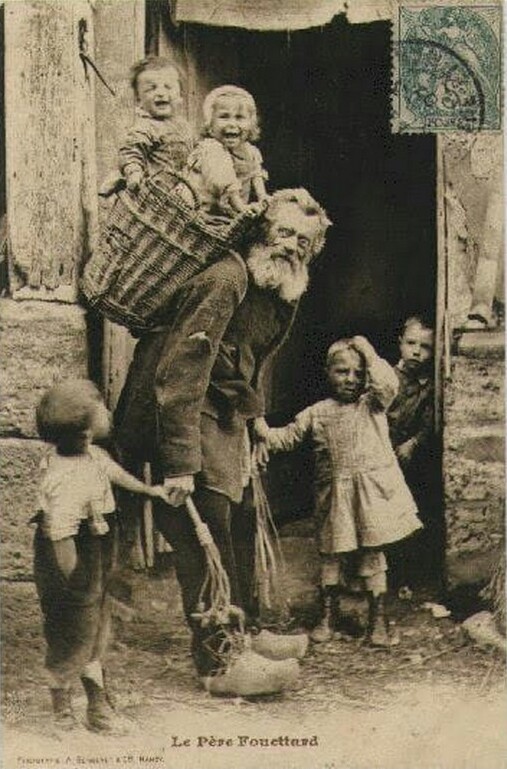
Père Fouettard
A dark, ragged companion of St. Nicholas, often carrying switches or a whip. This old photograph shows how simple the costume can be.
Public-domain photograph, 1930. Wikimedia Commons

Mari Lwyd
A Welsh winter visitor made from a horse skull or skull-like head on a pole, covered with a white cloth and decorated with ribbons. Strange, recognizable and very buildable.
Public-domain photograph, c. 1910–1914, National Library of Wales. Wikimedia Commons
More Monsters and Strange Creatures of Yule
Grýla — Iceland
A giant ogress or troll associated with Christmas, often imagined with a huge nose, wild hair, heavy clothing and a sack or cooking pot.
The Yule Cat — Iceland
An enormous, menacing cat. A cat mask, dark fur, claws and exaggerated eyes are enough to make the idea recognizable.
Belsnickel — German and Pennsylvania German tradition
A ragged, fur-covered winter visitor carrying bells, a sack or switches. Think unsettling woodsman rather than polished Santa.
Hans Trapp — Alsace
A wild, ragged winter figure often represented with dark clothing, beard, hood, straw or fur.
Bring us your Krampus. Bring us your winter monster. Bring us something we have never seen before.
Image note: All images in this document were selected from works identified by their source pages as public domain or released into the public domain. Source links are included beneath each image.