


Why the Rhine Research Center Matters
I have spent much of my life interested in paranormal history and the experiences people describe as psychic, supernatural or unexplained. Over the years, I have seen how quickly those subjects can become exaggerated, commercialized or dismissed. People are often expected to choose between believing every extraordinary claim and rejecting the entire subject as foolishness. The Rhine Research Center has always represented something different. It approaches these questions with curiosity, but it also recognizes that curiosity must be supported by research, documentation and a willingness to accept that the answer may not be simple.
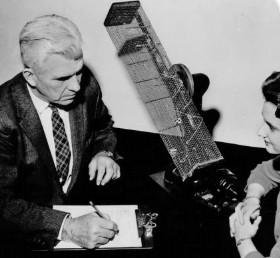
The center’s history began with the work of J.B. Rhine and Louisa Rhine at Duke University in the 1930s. They were not the first people to investigate psychic phenomena, but they helped move the study of these experiences into a university laboratory. They attempted to develop controlled experiments that could be recorded, repeated and statistically evaluated. At a time when subjects such as telepathy, clairvoyance and precognition were often treated as either spiritual truths or popular entertainment, the Rhines asked whether they could be studied using organized research methods.
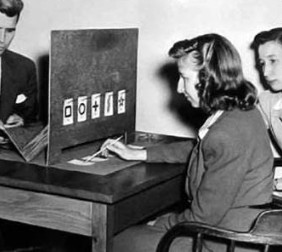
The experiments most commonly associated with the Rhine involved extrasensory perception, or ESP. Participants were asked to identify symbols on cards that they could not see. The purpose was to determine whether people could receive information without using the ordinary senses and whether their results exceeded what would be expected by chance. These experiments became famous, and the symbol cards remain one of the most recognizable images associated with psychic research.
The importance of the Rhine, however, cannot be reduced to a deck of cards or the results of one group of experiments. Its larger contribution was the idea that unusual experiences could be approached seriously without deciding in advance what the answer had to be. Researchers could listen to what people reported, develop ways to test particular claims and evaluate the results. They could also question the methods, identify problems and design better experiments. The work was never beyond criticism, nor should it have been. Research becomes stronger when its procedures and conclusions are examined carefully.
In 1937, J.B. Rhine and his colleagues established the Journal of Parapsychology. This gave researchers a place to publish their work and created a lasting written record of the field. It also meant that experiments, ideas and criticisms could be shared and examined by other researchers. That record is important because the history of paranormal research is often poorly remembered. Popular accounts tend to repeat the most dramatic claims while leaving out the methods, disagreements and years of work that surrounded them.
When Rhine retired from Duke, the research continued through an independent organization that eventually became the Rhine Research Center. The center remains in Durham, North Carolina, and continues to support research and education involving parapsychology, consciousness and unusual human experiences. It also preserves a history that might otherwise have been lost or reduced to a few familiar stories.
That history matters to me because the paranormal is too often treated as entertainment first and a subject of study second. Stories are repeated without anyone asking where they came from. Details are added because they make the story more exciting. Claims become accepted as facts simply because they have been repeated for a long time. On the other side, people sometimes dismiss an experience without listening to the person who had it or considering whether there may be something worth examining.
The Rhine offers another way of approaching these subjects. It allows for the possibility that a person may have had an experience they cannot explain without immediately declaring what caused it. It also allows researchers to take that person seriously while still asking difficult questions. What happened? Under what conditions did it happen? Could it be repeated? Was there another possible explanation? What evidence exists, and what part of the story depends on memory, interpretation or assumption?
Those questions do not diminish an experience. They are what allow us to understand it more clearly.
People who have unusual experiences are often placed in a difficult position. They may fear being mocked if they talk about what happened, but they may also be uncomfortable with people who immediately tell them that their experience proves the existence of ghosts, psychic abilities or some other extraordinary explanation. They may simply know that something happened and that they do not understand it. A serious research organization creates room for that uncertainty.
I have always believed that uncertainty is an important part of this work. It is easy to say that every unexplained event is paranormal. It is also easy to say that nothing paranormal could ever happen. Both positions allow us to stop asking questions. The harder position is to remain interested while being honest about what we know, what we do not know and what the evidence can actually support.
The Rhine Research Center has helped maintain that position for nearly a century. Its work reminds us that taking the paranormal seriously does not mean accepting every claim. It means believing that the subject is important enough to investigate properly. It means documenting experiences, preserving records and allowing conclusions to be questioned. It also means accepting that some experiments will fail, some explanations will change and some questions will remain unanswered.
The center’s archives and publications preserve the successes, disagreements, mistakes and continuing questions that have shaped the field. That is valuable not only to researchers but also to historians and anyone trying to understand how people have thought about psychic and paranormal experiences over time. Without institutions that preserve this work, the history becomes distorted. We remember the sensational claims and forget the careful, often ordinary work of designing experiments, recording results and arguing about what those results mean.
There is still a great deal we do not understand about consciousness, perception, memory and the ways people experience the world. Some events that once seemed mysterious have eventually received ordinary explanations. Other experiences remain difficult to understand. The fact that a question has not been answered does not prove that something paranormal occurred, but it also does not make the question unworthy of study.
The Rhine Research Center matters because it continues to protect the right to ask those questions. It has created a place where curiosity and skepticism can exist together and where unusual experiences can be examined without being automatically celebrated or dismissed. In a field that is often overwhelmed by certainty, entertainment and exaggeration, that careful approach remains necessary.

